In our previous discussion, we explored the concept of the energetic field surrounding your body, a field significantly influenced by your heart’s activity and your internal state. We concluded with the understanding that your emotional state is not merely a mental phenomenon but a holistic experience encompassing your entire being. Today, we delve deeper into this idea, addressing a crucial question: Can you deliberately alter your internal state?
The unequivocal answer is yes. This transformation isn’t achieved through sheer willpower or intellectual effort, but through a far more direct and accessible mechanism: your breath.
A Personal Journey with Anxiety
I once grappled with anxiety—not the fleeting unease, but a profound, unbidden sensation characterized by a tight chest, racing thoughts, and a persistent feeling of impending wrongness, even in the absence of any discernible threat. My attempts to alleviate this condition were numerous and varied. Yet, the most effective solution proved to be remarkably simple, cost-free, and devoid of any prerequisite belief system. It merely required a conscious shift in my breathing patterns. Once I grasped the underlying physiological principles, this practice transcended the realm of a mere trick and became a profound understanding of how to harmoniously engage with my own body.
The Autonomic Nervous System: Two States of Being
Our bodies are governed by an autonomic nervous system, a sophisticated control system that operates largely outside our conscious awareness. Within this system, two primary states dictate our physiological responses:
| State | Characteristics |
| Sympathetic | Heightened alertness, increased heart rate, muscle readiness, sharpened attention |
| Parasympathetic | Rest, recovery, repair, regulation, decreased heart rate |
Both states are indispensable for our survival and well-being. However, in the context of modern life, the sympathetic, or “alert” system, is frequently activated and, for many, fails to fully disengage. This sustained activation is a significant contributor to the experience of anxiety.
The Vagus Nerve: A Two-Way Communication Highway
Central to this discussion is the vagus nerve, a crucial neural pathway extending from your brainstem through your chest and into your abdomen. This nerve establishes a vital connection between your brain and key organs such as the heart, lungs, and digestive system.

Significantly, the vagus nerve operates as a two-way communication highway; signals travel not only from the brain to the body but also, in large part, from the body back to the brain. This constant feedback loop ensures that your brain is continuously updated on your body’s physiological state, offering a powerful means to influence your internal state not solely through cognitive processes but directly through bodily sensations.
The Mechanism Behind Breathing’s Efficacy
Breathing occupies a unique position within this intricate system. While it is an automatic process, it is also subject to conscious control, thereby serving as a bridge between deliberate action and involuntary physiological response. During inhalation, your heart rate experiences a slight increase, while exhalation leads to a subtle decrease. This natural fluctuation is termed respiratory sinus arrhythmia.
The critical insight here is that a prolonged, slower exhalation tends to promote a reduction in heart rate, which is directly correlated with a shift towards a more relaxed, parasympathetic state. Consequently, by consciously modifying your breathing pattern, you are effectively transmitting a physiological signal to your body, indicating that it is safe to transition out of an alert mode. This is not merely a conceptual idea but a tangible, physiological cue.
A Simple Practice for Regulation
The practice itself is straightforward:
1.Inhale slowly and steadily through your nose.
2.Exhale slowly through your nose, ensuring the exhalation is longer than the inhalation.

For instance, you might inhale for a count of four and exhale for a count of eight. Repeating this pattern for a few minutes is often sufficient for many individuals to observe a noticeable shift—reduced tension, a deceleration of thoughts, and a general sense of calm. If immediate results are not apparent, persistence is key, as the nervous system may require repeated exposure before responding. The objective is not to forcibly induce calmness but to cultivate the optimal conditions for your body to naturally regulate itself.
Connecting to the Broader Picture
In our previous discussion, we touched upon the measurable electrical and magnetic activity generated by the body, particularly around the heart, and how internal states can influence these patterns. Research from the HeartMath Institute suggests a correlation between more regulated breathing and more stable, coherent heart rhythm patterns.
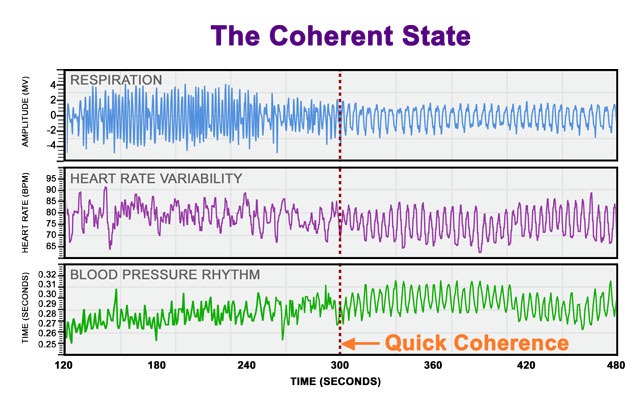
While the broader implications of this beyond the individual body—and its potential effects on others—remain an active area of exploration, it underscores a significant point: regulating your breathing transcends subjective feelings of well-being; it actively alters measurable physiological patterns within your body. This alone warrants considerable attention.
Beyond Science: The Deeper Impact
Beyond the scientific explanations, there’s a profound personal dimension to this practice. In my experience, a calm internal system fosters greater presence, reduces reactivity, and enhances awareness. It facilitates a more considered response to situations rather than an impulsive reaction. Whether you label this as clarity, presence, or awareness, it becomes more readily accessible when the body is not perpetually ensnared in a state of tension. For me, this is more than just a technique; it is a means of creating internal space for positive transformation.
Consider This
Your body possesses an inherent, built-in system for returning to a state of calm. It has always been there, and it responds to something as fundamental as your breath. While not always instantaneous or perfect, its reliability is significant. Therefore, instead of asking, “How do I stop feeling like this?” perhaps a more pertinent question is: “What signal am I sending to my own system right now?” And if that signal can be consciously altered, what other profound changes might unfold?
This piece aims to offer both practical guidance and food for thought. The application of this knowledge rests entirely with you.