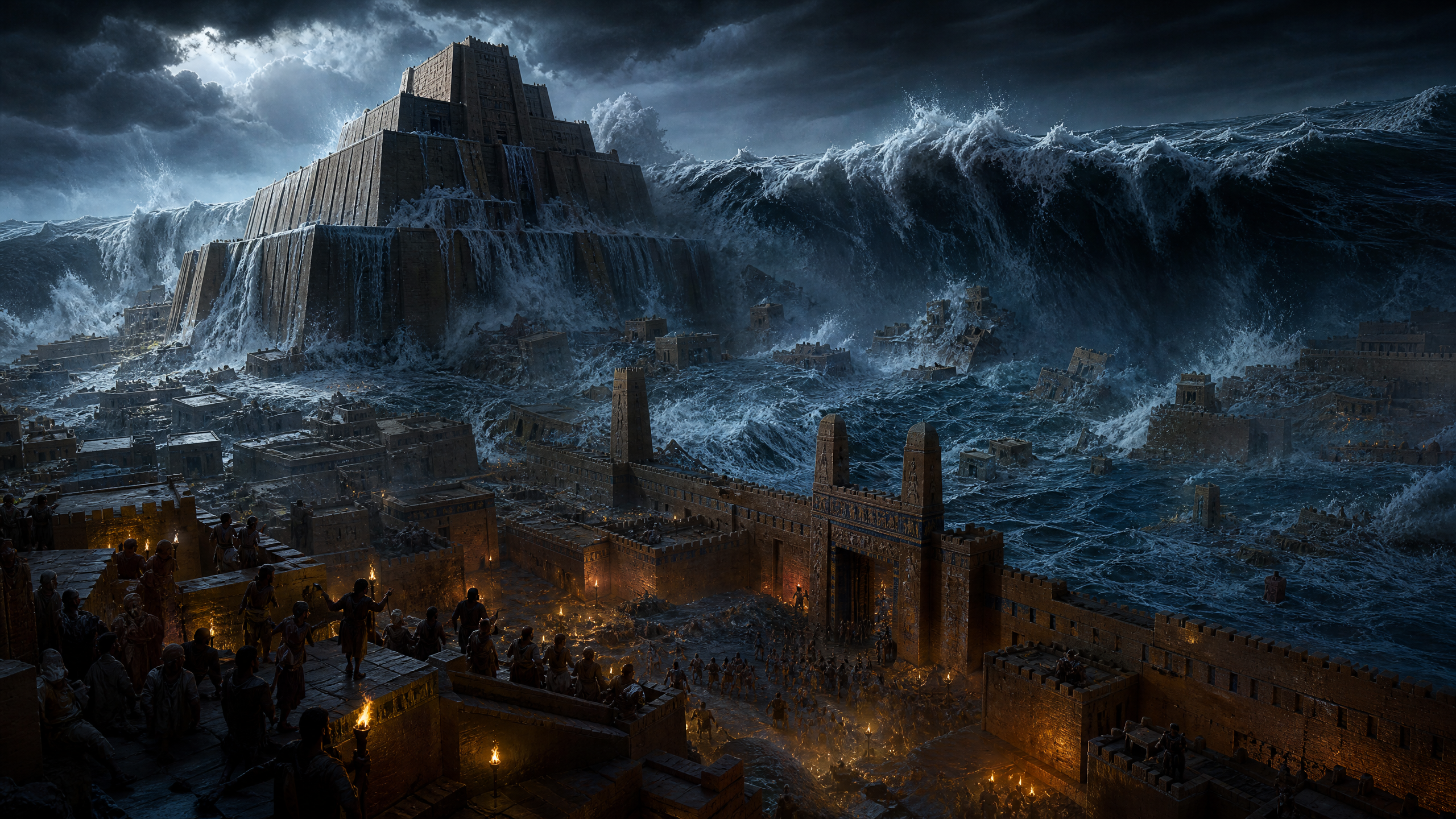
The flood story is one of humanity’s most familiar narratives. Yet, in one of its oldest recorded forms, the reason for the flood diverges sharply from common expectation. It isn’t about morality; it’s about disruption.
In the Atrahasis Epic, an 18th-century BCE Akkadian tale, humanity was created for a practical purpose: divine labor. The gods needed workers, and humans provided. The system functioned. Irrigation canals were maintained, fields cultivated, temples received offerings. The balance held.
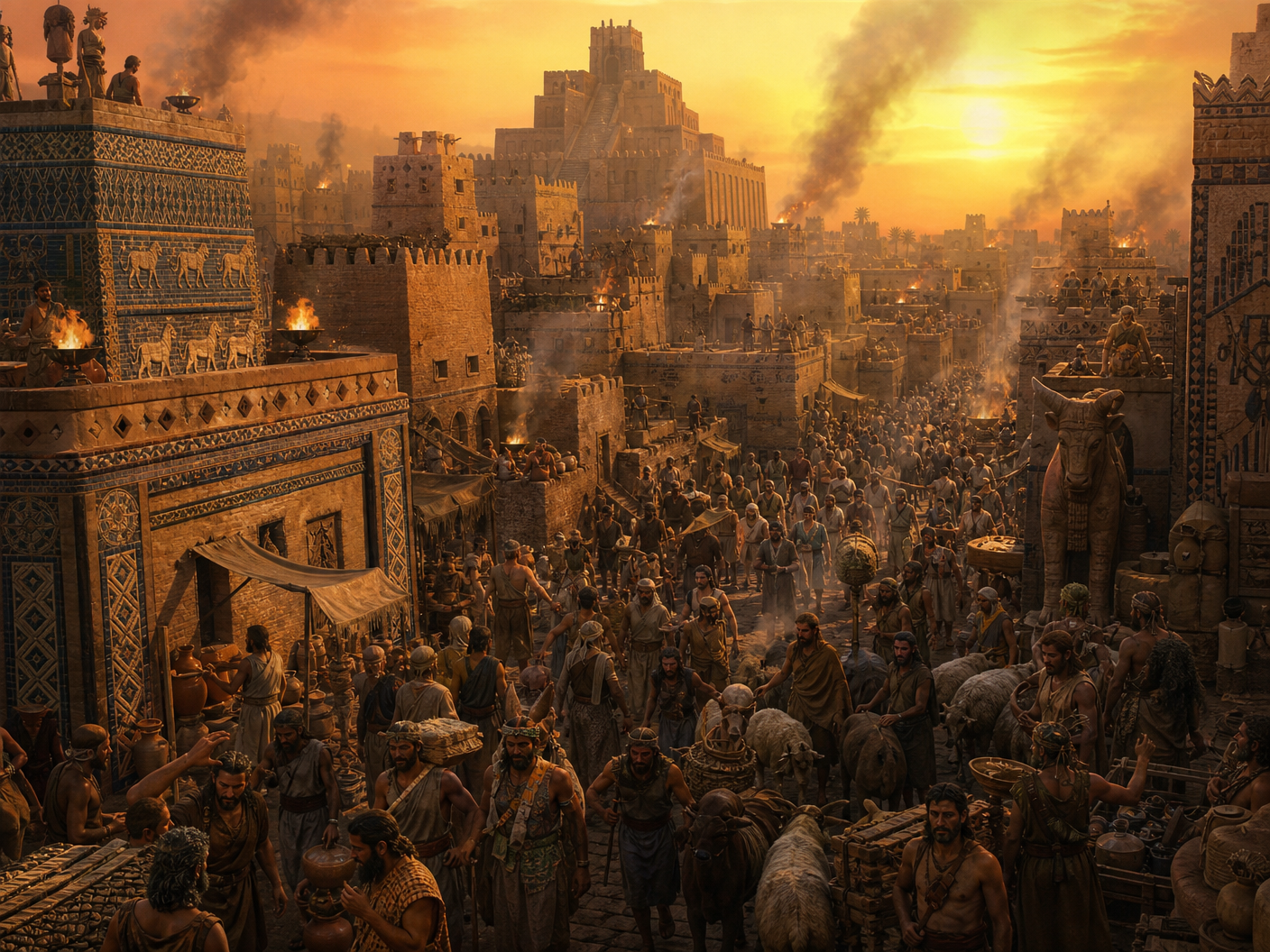
Then the population grew. And with it came the noise.
Not metaphorical noise, but literal sound. Constant activity. Endless movement. Humanity had become loud enough to disturb the gods themselves. According to the text, this disturbance became unbearable to the god Enlil.
His response escalated. First came plague, then drought, then famine. Each time, another god—Enki—intervened indirectly, passing knowledge to humanity and allowing civilization to recover. But the cycle continued.
In Mesopotamian thought, order and predictability were paramount. A functioning world depended on balance between labor, nature, cities, and the divine. Humanity had not become evil in the later moral sense; it had become overwhelming.
Eventually, a decision was made: a flood. Not a punishment, but a reset.
One Man Survives
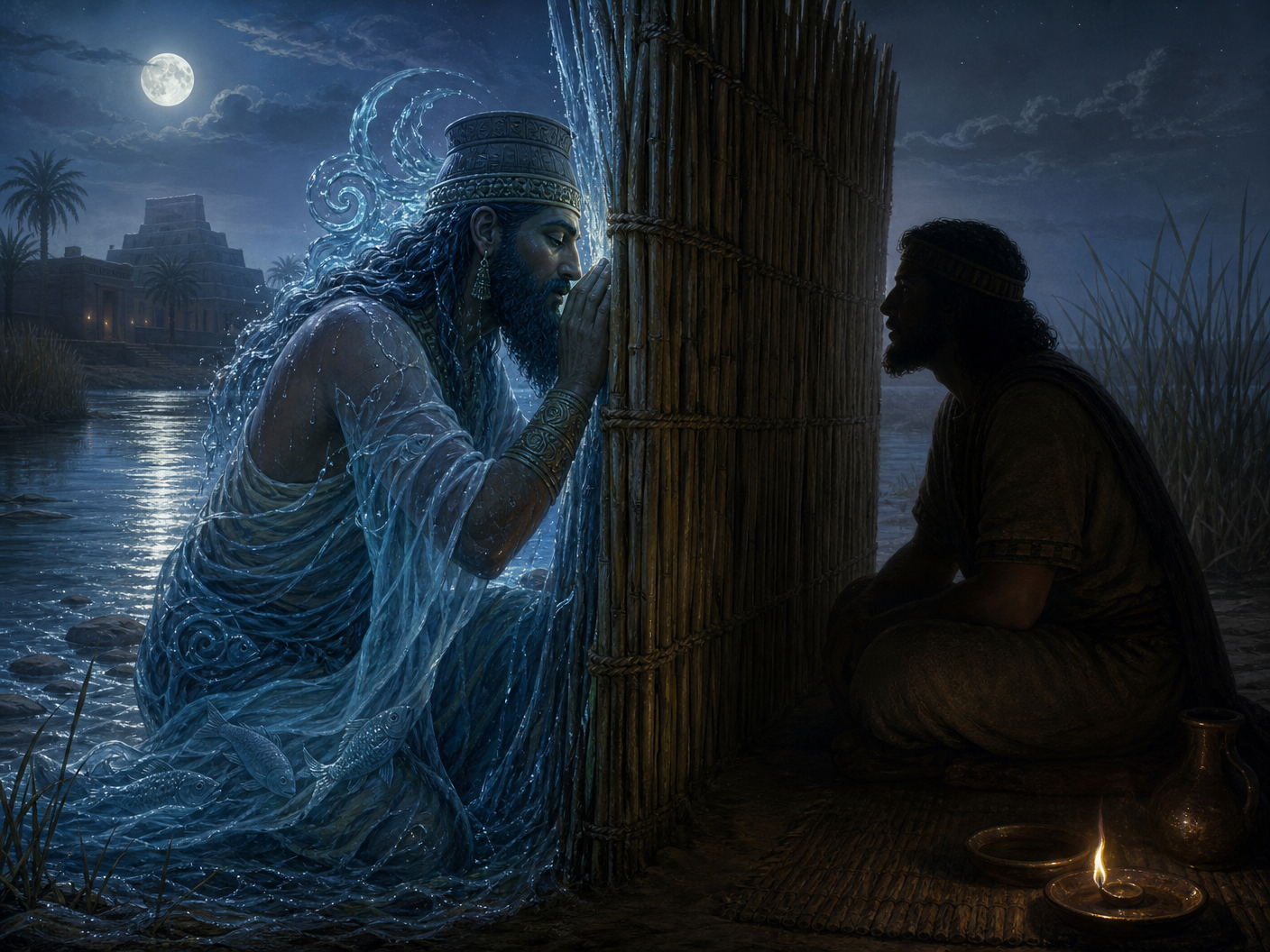
Enki could not openly oppose the gods’ decision, so he worked around it. Instead of warning Atrahasis directly, he spoke to a wall, knowing Atrahasis would overhear. The warning was understood. A boat was built. Life was preserved.
The flood came and passed. Afterward, something fundamental changed. Humanity was allowed to continue, but no longer without limits. The text describes the introduction of mortality, infertility, and other restraints as part of restoring balance to the world. Growth itself now carried boundaries.
So What Does This Mean?
Unlike later flood traditions that focus heavily on sin or corruption, the Atrahasis story presents a different fear: What happens when a system becomes too large to sustain itself?
Most historians and scholars view this story as part of a broader tradition of flood narratives across the ancient Near East, likely shaped by both environmental memory and cultural storytelling. Yet, beneath the myth lies an idea that still resonates.
Every system has a threshold. A point where growth stops strengthening the structure and starts straining it. This applies to cities, empires, economies, and civilizations.
Consider This:
If something expands without limit—even successfully—at what point does success itself become the problem?
The Atrahasis Epic offers a surprisingly modern lesson from an ancient clay tablet: even the most functional systems can collapse under their own weight if they lack built-in limits.